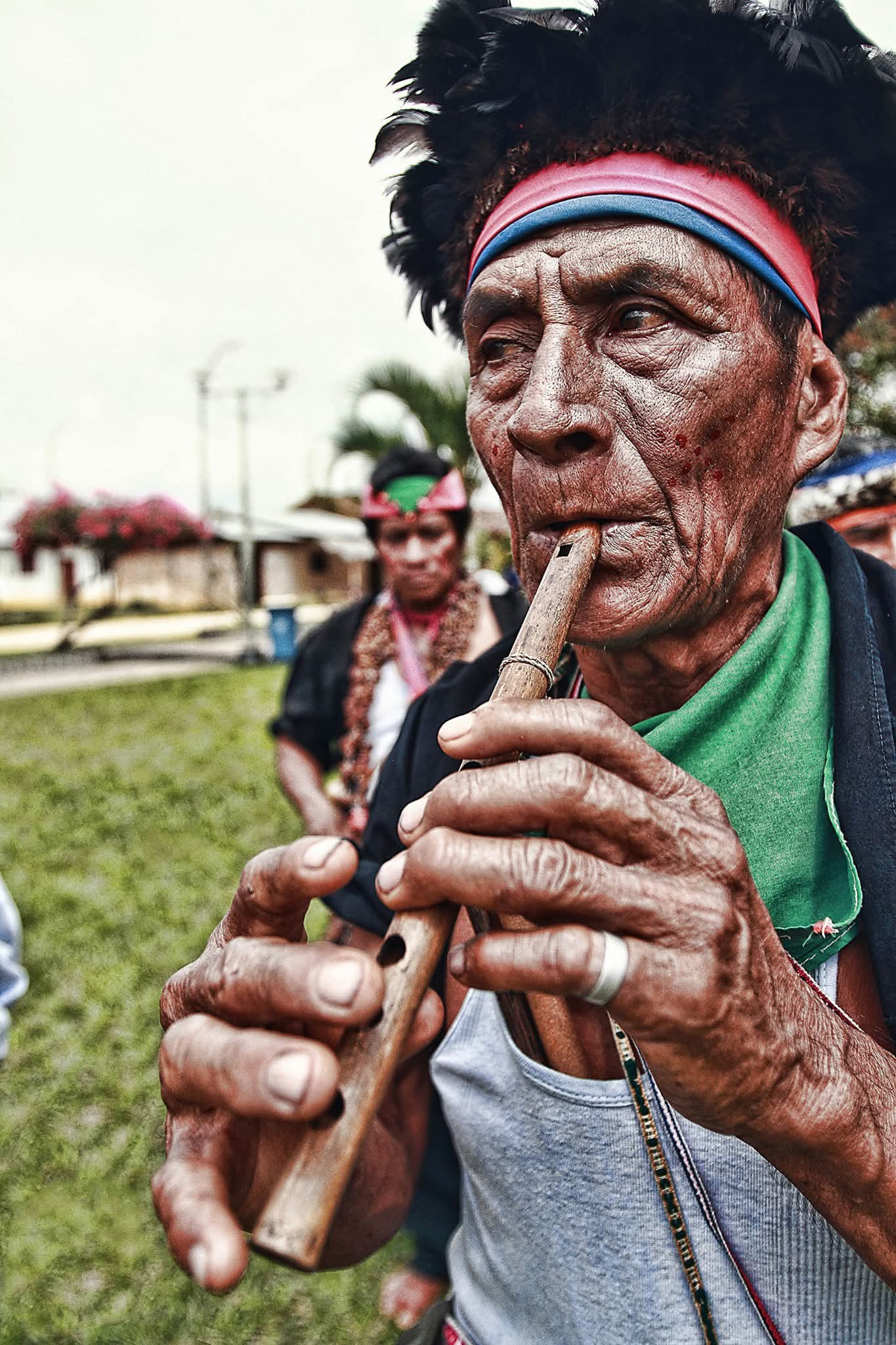
La comunidad WaykuThe Wayku Community
Bienvenidos al Barrio Wayku, el «alma folclórica» de Lamas. Entrar en esta comunidad es como atravesar un portal donde la selva amazónica se da la mano con los Andes altos. Con sus calles de tierra rojiza y casas construidas para desafiar el calor de la selva, el Wayku es la única comunidad indígena del Amazonas peruano que habla quechua no como una lengua de comercio prestada, sino como lengua materna.
Welcome to the Barrio Wayku, the "folkloric soul" of Lamas. Stepping into this community is like walking through a portal where the Amazon rainforest shakes hands with the high Andes. With its reddish earth streets and houses built to defy the jungle heat, the Wayku is the only indigenous community in the Peruvian Amazon that speaks Quechua not as a borrowed trade language, but as a mother tongue.
Pero ¿cómo acabó una cultura altoandina en medio de la selva tropical? La respuesta está en una historia de resistencia obstinada, identidades equivocadas y supervivencia cultural.
But how did a high-Andean culture end up in the middle of the tropical rainforest? The answer lies in a story of stubborn resistance, mistaken identities, and cultural survival.
1. La leyenda de los guerreros fugitivos
1. The Legend of the Runaway Warriors
La historia del Wayku comienza con una negativa a rendirse.
The history of the Wayku begins with a refusal to surrender.
Según la tradición oral, la gente de aquí es descendiente directa de los Chankas, una feroz tribu guerrera del sur andino (Apurímac y Huancavelica). En 1438, tras una aplastante derrota ante el Imperio inca en la Batalla de Yahuarpampa, una facción del ejército Chanka liderada por el general Ankoallo tomó una decisión desesperada: preferían huir al desconocido «infierno verde» del Amazonas que inclinarse ante el inca Pachacútec.
According to oral tradition, the people here are the direct descendants of the Chankas, a fierce warrior tribe from the southern Andes (Apurímac and Huancavelica). In 1438, after a crushing defeat by the Inca Empire at the Battle of Yahuarpampa, a faction of the Chanka army led by General Ankoallo made a desperate decision: they would rather flee into the unknown "Green Hell" of the Amazon than bow to the Inca Pachacútec.
Atravesaron los Andes y se asentaron en las cimas de las montañas de San Martín. A diferencia de otras tribus amazónicas que vivían junto a los ríos, estos recién llegados construyeron sus hogares en tierras altas —una estrategia militar traída de la sierra para avistar enemigos que se acercaban desde abajo.
They trekked across the Andes and settled on the mountain peaks of San Martín. Unlike other Amazonian tribes who lived by the rivers, these newcomers built their homes on high ground—a military strategy brought from the highlands to spot enemies approaching from below.
El giro científico: Aunque la «migración Chanka» es el corazón de su identidad, la ciencia moderna cuenta una historia aún más compleja. Estudios de ADN revelan que el pueblo Wayku comparte un ascendencia significativa con grupos amazónicos como los Awajún y Cocamas. Resulta que su lengua quechua no la trajo Ankoallo, sino que probablemente la impusieron los misioneros jesuitas en el siglo XVII como lengua franca para unir a las diversas tribus «Motilones» bajo una sola lengua. Sea por sangre o por espíritu, los Wayku mantienen el orgullo de los Chankas: son un pueblo que nunca ha sido verdaderamente conquistado.
The Scientific Plot Twist: While the "Chanka migration" is the heart of their identity, modern science tells an even more complex story. DNA studies reveal that the Wayku people share significant ancestry with Amazonian groups like the Awajun and Cocamas. It turns out their Quechua language wasn't brought by Ankoallo, but likely imposed by Jesuit missionaries in the 17th century as a lingua franca to unite the diverse "Motilones" tribes under one tongue. Regardless of whether by blood or by spirit, the Wayku maintain the pride of the Chankas: they are a people who have never truly been conquered.
2. Vida en rojo y marrón: arquitectura y clanes
2. Life in Red and Brown: Architecture and Clan
Lo primero que se nota en el Wayku es la arquitectura. Las casas están construidas de tapial (tierra apisonada) con la distintiva tierra rojiza de la zona, techadas con hojas de palma o tejas.
The first thing you notice in the Wayku is the architecture. The houses are built of tapial (rammed earth) using the distinct reddish soil of the area, roofed with palm leaves or tiles.
- El misterio de las ventanas ausentes: Verás muchas casas sin ventanas. No es por falta de materiales; es una forma ancestral de aire acondicionado. Al mantener el espacio oscuro y cerrado, el interior se mantiene fresco a pesar del calor tropical afuera.
- The Mystery of the Missing Windows: You will spot many houses with no windows. This isn't for lack of materials; it is an ancient form of air conditioning. By keeping the space dark and enclosed, the interiors remain cool despite the tropical heat outside.
- El poder del apellido: La sociedad aquí se organiza en clanes patrilineales. Si conoces a un local, su apellido probablemente te indica el rol tradicional de su familia. Las familias Sangama y Guerra suelen ser líderes y alfareros; los Cachique y Tapullima son conocidos por su conocimiento agrícola; y los Sinarahua son los guardianes de la música y la historia oral.
- The Power of the Name: Society here is organized into patrilineal clans. If you meet a local, their surname likely tells you their family's traditional role. The Sangama and Guerra families are often leaders and potters; the Cachique and Tapullima are known for agricultural expertise; and the Sinarahua are the keepers of music and oral history.
3. Maestros del barro y del hilo
3. Masters of Clay and Thread
Mientras los hombres cultivaban tradicionalmente las laderas empinadas, las mujeres del Wayku se convirtieron en guardianas del arte.
While the men traditionally farmed the steep slopes, the women of Wayku became the guardians of art.
- Cerámica: La alfarería aquí no es solo decoración; es una forma de vida reconocida como Patrimonio Cultural de la Nación. Con herramientas sencillas y técnicas ancestrales, las mujeres elaboran vasijas sin torno, pintándolas con pigmentos naturales.
- Ceramics: The pottery here is not just for decoration; it is a way of life recognized as National Cultural Heritage. Using simple tools and ancestral techniques, women craft vessels without pottery wheels, painting them with natural pigments.
- Textiles: La vestimenta es una mezcla vibrante de estilos andino y amazónico. Los hombres visten tradicionalmente el chumbe (una faja tejida) para proteger la cintura al cargar leña o plátanos. Las mujeres usan la racu katana, una manta o tela colorida para cargar a los bebés en la espalda mientras trabajan.
- Textiles: The clothing is a vibrant mix of Andean and Amazonian styles. Men traditionally wear the chumbe (a woven belt) to protect their waist while carrying heavy loads of firewood or plantains. Women use the racu katana, a colorful blanket/cloth used to carry babies on their backs while they work.
4. Cuando el Wayku festeja: un calendario de alegría
4. When the Wayku Parties: A Calendar of Joy
La comunidad Wayku es famosa por transformar las fiestas religiosas en explosiones de color y sátira.
The Wayku community is famous for transforming religious holidays into explosions of color and satire.
- El Carnaval (feb–mar): Si visitas en Carnaval, no oirás a la gente llamarse por el nombre. La contraseña es «¡Chivo!». Los locales se disfrazan con máscaras, bailan el changanakuy (un baile que implica un duelo de piernas) y plantan umishas (árboles cargados de regalos) para derribarlos al final de la fiesta.
- The Carnaval (Feb–March): If you visit during Carnaval, you won't hear people calling each other by name. The password is "¡Chivo!" (Goat). Locals dress in masks, dance the changanakuy (a dance that involves a duel of legs), and plant umishas (trees laden with gifts) to be cut down at the party's end.
- Santa Cruz de los Motilones (7–16 de julio): Es la fiesta más grande del año. Incluye el afaneo: semanas de preparación comunal en las que se junta leña y se fermentan galones de chicha de higo y masato. Las noches se llenan con la «pandilla», un baile grupal masivo que se adueña de las calles.
- Santa Cruz de los Motilones (July 7–16): This is the biggest event of the year. It involves the afaneo—weeks of communal preparation where firewood is gathered and gallons of chicha de higo (fig beer) and masato are fermented. The nights are filled with the "pandilla," a massive group dance that takes over the streets.
- Semana Santa: En una fusión única de fe, la comunidad Wayku representa teatralmente la Pasión de Cristo, mezclando la liturgia católica con la interpretación indígena.
- Semana Santa: In a unique fusion of faith, the Wayku community performs a theatrical re-enactment of the Passion of Christ, blending Catholic liturgy with indigenous interpretation.
5. Visitar hoy: turismo vivencial
5. Visiting Today: Vivencial Tourism
Hoy el Wayku es una puerta abierta. Se encuentra a pocos minutos en mototaxi cuesta abajo desde la plaza principal de Lamas.
Today the Wayku is an open door. It is located just a short mototaxi ride downhill from the main plaza of Lamas.
- La plaza: El corazón del barrio es su propia Plaza de Armas, adornada con esculturas del champanero y la pretenera, estatuas que inmortalizan el trabajo cotidiano de sus ancestros.
- The Plaza: The heart of the neighborhood is its own Plaza de Armas, adorned with sculptures depicting the champanero and the pretenera, statues that immortalize the daily labor of their ancestors.
- La experiencia: Es común encontrar a los locales realizando bailes tradicionales con flautas y tambores para los visitantes. Puedes visitar los talleres en sus casas, comprar cerámica directamente a los artesanos y escuchar la cadencia rítmica del idioma Kechwa-Lamista —un sonido que ha sobrevivido a imperios, misioneros y la modernidad.
- The Experience: It is common to find locals performing traditional dances with flutes and drums for visitors. You can visit the workshops in their homes, buy ceramics directly from the artisans, and listen to the rhythmic cadence of the Kechwa-Lamista language—a sound that has survived empires, missionaries, and modernity.
Cómo llegar: Desde Tarapoto se llega a Lamas en unos 30 minutos en auto. Una vez en Lamas, puedes tomar un mototaxi hacia el «tercer piso» de la ciudad para entrar al Barrio Wayku.
How to get there: From Tarapoto, it is a 30-minute drive to Lamas. Once in Lamas, you can take a mototaxi down to the "third floor" of the city to enter the Barrio Wayku.